PetNutriFactory – Leading Chinese Manufacturer of Custom Pet Nutritional Supplements
- We specialize in the OEM & ODM design and manufacturing of custom pet nutritional supplements.
- We specialize in the OEM & ODM design and manufacturing of pet nutritional supplements. Our professional R&D and production team is dedicated to providing fully customized nutrition solutions for global pet brands.
1. Customized Nutrition Solutions
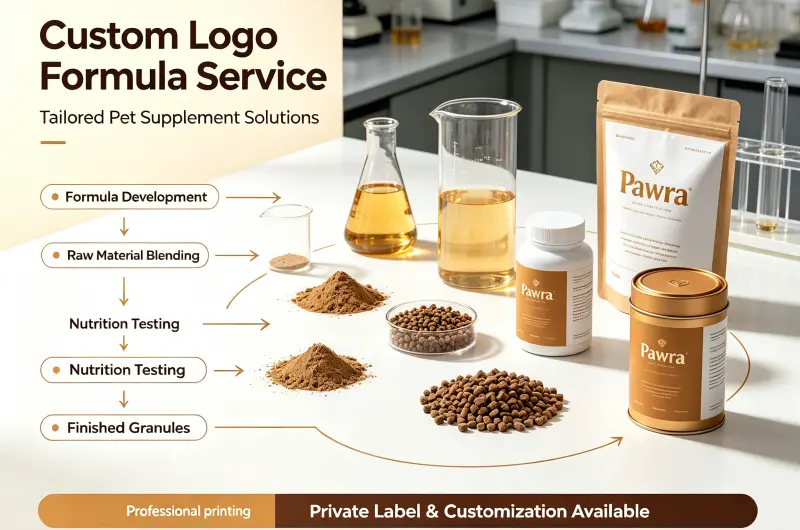
- Custom Formula & Raw Material Selection for Different Pet Health Needs
- Personalized Flavor & Label Design to Match Your Brand
- Tailored Dosage & Potency for Specific Pet Groups
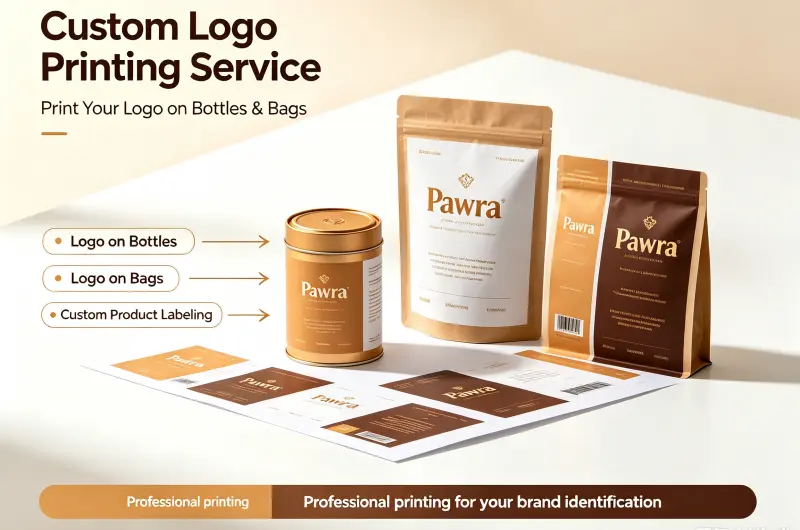
- Private Label Logo Printing & Packaging Customization
- Custom Product Specification & Outer Packaging to Enhance Brand Value
1. OEM and ODM Services
- Customized Logo & Label Printing for Brand Identification
- Personalized Flavor & Formula Customization for Brand Consistency
- Professional Packaging Design to Upgrade Product & Brand Value
- Tailored Supplement Dosage & Specifications for Various Market Needs
- Professional Raw Material & Formula Development for Safe & Reliable Efficacy
Joint Support Supplements for Dogs & Cats
PetNutriFactory supports pet brands, distributors, wholesalers and retailers looking to develop joint support supplements for dogs and cats. Whether you are building a new pet wellness range or expanding an established product portfolio, our OEM and ODM approach can help you plan products around your target market, preferred ingredients, dosage form, packaging and commercial requirements.
Joint health is an important part of the broader pet wellness category, especially for brands serving active dogs, senior pets and owners who want to support everyday mobility. A successful product begins with a clear positioning strategy, a suitable formula and reliable manufacturing processes. PetNutriFactory works with B2B customers to discuss product concepts and develop private label solutions according to agreed specifications and available manufacturing capabilities.
Explore Joint Support Supplement Products
Joint support products can be developed in different formats to suit brand positioning, customer preferences and the needs of the intended animal. The most suitable format depends on the formula, serving size, ingredient characteristics, packaging plan and target price. The following product types can be considered when planning a joint health supplement range, subject to manufacturing availability.
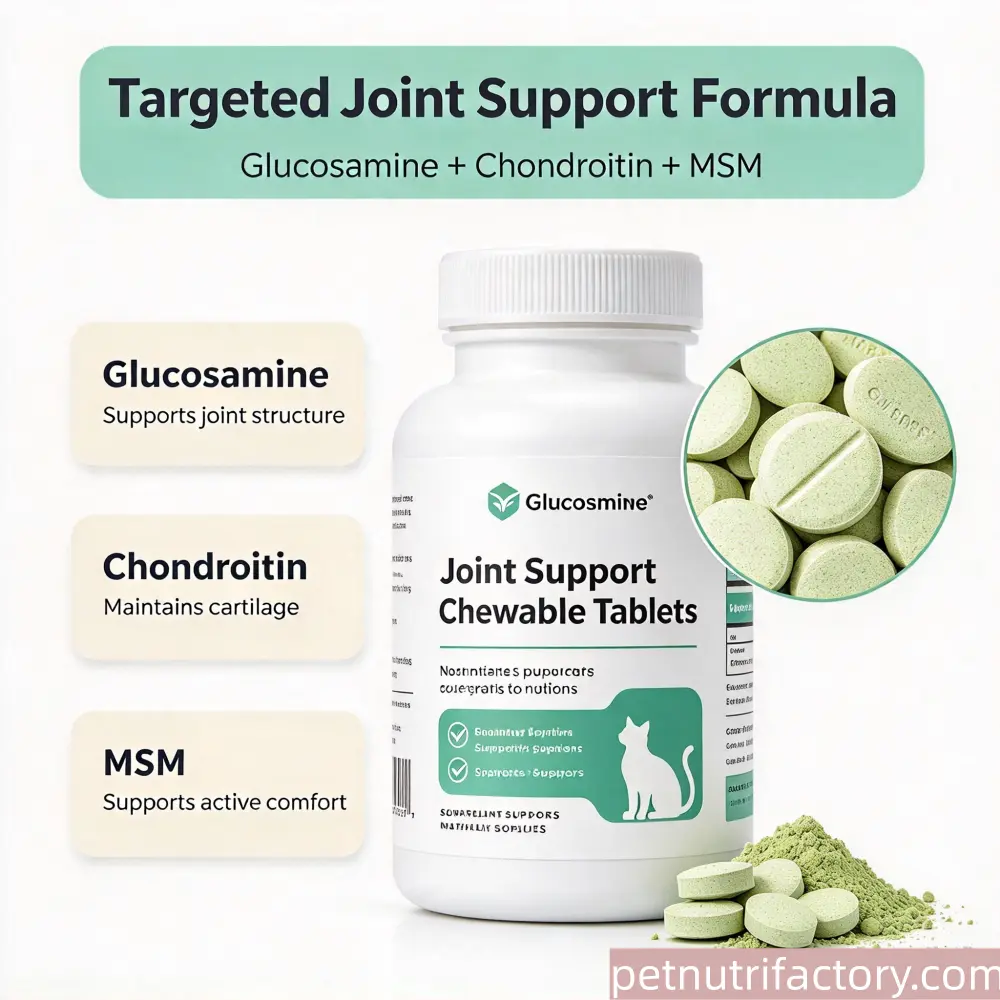
Joint Support Chewable Tablets
Chewable tablets are a familiar format in the pet supplement market and can be convenient for brands seeking a clearly portioned product. A formula may combine selected joint-support ingredients with suitable flavoring and other functional components. Tablet size, serving instructions, ingredient levels and packaging should be determined during product development, taking into account the intended species and product specifications.
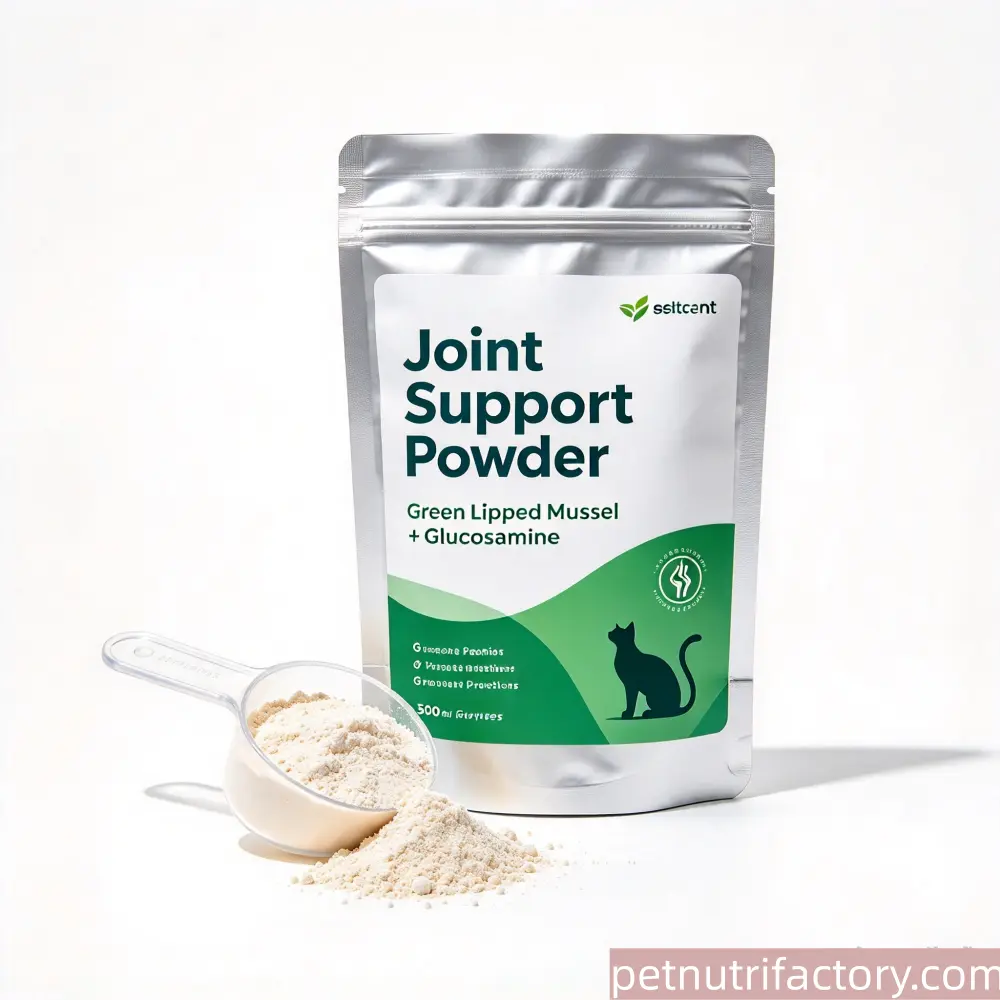
Joint Support Powders
Powder supplements offer flexibility for brands that want to incorporate a blend of ingredients into a scoopable or measured serving format. Depending on the formula, powders may be packed in jars, tubs, pouches or other suitable packaging. During development, important considerations include powder flow, blend uniformity, moisture control, serving size, flavor and compatibility between ingredients.
Joint Support Soft Chews
Soft chews can provide a treat-like format for pet supplement brands. Their texture, size, flavor and ingredient profile should be designed for the target market and intended animal. Soft chew development may require particular attention to ingredient stability, moisture management, palatability and shelf-life evaluation. Availability depends on the factory's production capabilities and the requirements of the proposed formula.
Liquid Joint Support Supplements
Liquid products can suit brands looking for an alternative to tablets or powders. Formula development should consider ingredient solubility or suspension, taste, viscosity, packaging compatibility and storage conditions. The appropriate bottle, closure and serving method depend on the final formulation and target market. Liquid formats should only be offered where suitable production and quality-control processes are available.
Key Ingredients Used in Pet Joint Support Formulas
Ingredient selection is one of the most important decisions in developing pet joint support supplements. Different ingredients have different functions, evidence levels, formulation requirements and regulatory considerations. The best formula is not necessarily the one with the longest ingredient list; it is the one that matches the product concept, intended species, target market, serving format and substantiated product claims.
Glucosamine
Glucosamine is commonly included in joint-support products for pets. When evaluating it for a custom formula, brands should confirm the ingredient source, specification, purity, intended inclusion level and compatibility with other ingredients. The final amount per serving should be based on the product design and applicable requirements rather than copied from a competitor's label.
Chondroitin Sulfate
Chondroitin sulfate is another ingredient frequently discussed in joint nutrition formulas. For B2B product development, important considerations include material specifications, supplier documentation, ingredient compatibility and the way the product will be presented to consumers. Any statements about benefits should be reviewed carefully and supported by appropriate evidence for the intended product and market.
MSM (Methylsulfonylmethane)
MSM may be considered as part of a multi-ingredient joint-support formula. The proposed inclusion level, ingredient quality, blend uniformity and serving size should be assessed during formulation. Brands should also review local requirements for the ingredient and ensure that product claims do not imply treatment or prevention of disease unless specifically permitted by applicable law.
Green-Lipped Mussel
Green-lipped mussel is a marine-derived ingredient used in some pet wellness and joint nutrition products. Its suitability depends on the material specification, processing method, sensory characteristics, allergen considerations and target formulation. Buyers should request relevant ingredient documentation and evaluate whether the material is appropriate for their product positioning and destination market.
Omega-3 Fatty Acids
Omega-3 fatty acids, including EPA and DHA from suitable sources, may be considered in broader pet wellness formulations. Formulators should account for the source oil, active fatty acid content, oxidation control, flavor, packaging and storage requirements. If an oil-based ingredient is included, the product development team should consider measures to help protect quality throughout the intended shelf life.
Type II Collagen, Hyaluronic Acid and Other Ingredients
Depending on the product concept, brands may explore type II collagen, hyaluronic acid and other ingredients that are appropriate for the intended animal and market. Each ingredient should be reviewed for identity, quality, stability, dosage feasibility and regulatory status. Ingredient combinations should be selected for a clear formulation purpose rather than added solely to make the label appear more complex.
Joint Support Solutions for Different Pet Needs
Daily Joint Health Support
A daily-use product concept may focus on convenient serving instructions, a clearly defined ingredient profile and packaging that supports repeat purchases. Brands can position the product within a broader pet wellness range, provided that all claims are appropriate, substantiated and compliant with the regulations of the intended market.
Mobility Support for Active Dogs
Brands serving active dogs may wish to develop a product concept associated with everyday mobility and general wellness. Formula decisions should be guided by the intended audience, ingredient evidence, product format and applicable claims rules. Avoid implying that a supplement can guarantee performance, prevent injury or replace veterinary care.
Joint Nutrition for Senior Dogs
Senior-pet products are an important development opportunity for brands that want to serve changing pet wellness needs. A product designed for this segment may emphasize ease of administration, clear serving directions and a formula suitable for the intended age group. Any age-related positioning should be supported by appropriate product specifications and reviewed for compliance in the destination market.
Joint Supplements for Cats
Cat products should be developed with the intended species in mind rather than simply adapting a dog formula. Palatability, serving size, ingredient suitability and dosage form can differ between cats and dogs. Brands planning a feline product should confirm that each ingredient and its intended use are appropriate for cats and that the finished label provides clear, species-specific directions.
Custom Joint Support Supplements for Your Brand
PetNutriFactory's OEM and ODM service is intended for businesses that want to develop products under their own brand. The project can begin with an existing product concept or a new brief describing the target animal, desired ingredients, format, market, price position and packaging requirements. The scope of customization depends on the requested specifications, minimum order quantities and available production processes.
Custom Formula Development
Brands may provide a preferred ingredient list or ask for support in structuring a product brief. Key decisions include ingredient identity, specification, target inclusion level, serving size, flavor profile, dosage form and intended claims. A formula should be finalized only after technical feasibility, ingredient availability, stability needs and destination-market requirements have been reviewed.
Dosage Form and Product Format
Depending on available manufacturing capabilities, product concepts may include chewable tablets, powders, soft chews or liquids. Each format has different requirements for processing, ingredient compatibility, packaging and quality testing. Selecting a format early helps buyers compare costs and assess how the product will fit into their existing portfolio.
Flavor and Palatability Considerations
Palatability can influence how easily pet owners administer a supplement. Flavor options should be evaluated in relation to the target species, ingredient profile, processing method and product format. Any proposed flavor or palatability solution should be confirmed during development and sampling rather than assumed to be suitable for every animal.
Private Label and Packaging Customization
Private label projects may include brand artwork, label information, packaging format and presentation details. Depending on project requirements and available options, packaging may include bottles, jars, tubs, pouches or cartons. Buyers should confirm packaging dimensions, material suitability, artwork specifications, language requirements and any mandatory label information before approving production.
MOQ, Samples and Bulk Production
Minimum order quantity depends on the product format, formula complexity, ingredient sourcing, packaging selection and production setup. If you are launching a new brand or testing a new market, share your target order quantity at the enquiry stage so the project can be assessed realistically. Sample availability, sample fees, lead times and the possibility of a pilot run should be confirmed for each specific product rather than assumed to be the same across all formats.
Quality Control and Product Documentation
Reliable pet supplement manufacturing requires clear specifications and documented quality procedures. Before placing an order, B2B buyers should understand which checks are performed on raw materials, during production and on finished products. The exact testing program depends on the formula, risk assessment, product format, destination market and customer requirements.
Raw Material Specifications
Ingredient documentation may include specifications, certificates of analysis and other supplier records where available. Buyers should confirm ingredient identity, purity or assay requirements, microbiological criteria and relevant contaminant limits. Documentation requirements should be agreed before formula approval and purchasing.
Production Consistency
Production controls should be designed to help maintain consistency between batches. Depending on the product, relevant considerations may include weighing accuracy, mixing uniformity, moisture control, processing parameters, filling accuracy and packaging checks. Specific controls should be confirmed with the manufacturer for the chosen product type.
Finished Product Testing
Finished-product testing may be considered for parameters such as identity or assay of selected ingredients, microbiological quality, moisture, stability or other product-specific requirements. Not every test applies to every formula. Buyers should request a clear explanation of the available tests, testing methods, laboratory arrangements and documentation before finalizing the purchase order.
Label Review and Market Requirements
Pet supplement labeling rules differ between countries and may depend on the product's composition, intended use and marketing claims. Before launch, brands should review ingredient declarations, guaranteed analysis or other required statements, feeding directions, warnings, manufacturer information and claim wording with qualified regulatory support where needed. Manufacturing documentation does not automatically mean that a product is approved in every market.
Why Work with PetNutriFactory?
Choosing a manufacturing partner involves more than comparing a unit price. Buyers should evaluate whether the supplier understands the product brief, can explain its manufacturing capabilities, provides clear specifications and communicates project requirements before production begins. PetNutriFactory welcomes enquiries from businesses exploring custom pet joint support products and private label development.
B2B-Focused Product Development
A structured product brief helps align the formula, format, packaging and commercial goals. Sharing your target market, intended species, preferred ingredients and estimated quantity at the beginning can make technical discussions more efficient and help identify practical options.
Flexible Product Planning
Different brands have different priorities. Some focus on a straightforward core formula, while others require a distinctive ingredient combination, a specific dosage form or coordinated packaging. The available options should be assessed against technical feasibility, sourcing, minimum order quantities and the intended launch schedule.
Clear Project Communication
Before moving to production, buyers should confirm the approved formula, ingredient specifications, packaging artwork, product standards, order quantity, lead time, payment terms and required documents. A written approval process helps reduce misunderstandings and gives both parties a shared reference for the project.
How to Start an OEM or ODM Joint Supplement Project
Step 1: Share Your Product Brief
Tell us whether the product is intended for dogs, cats or both, and describe your target customer, destination market, preferred dosage form and desired product positioning. If you already have a formula or competitor reference, include the relevant details for evaluation.
Step 2: Review Formula and Manufacturing Feasibility
The next step is to review ingredient availability, technical requirements, packaging options, expected minimum order quantity and any testing or documentation needs. Any proposed formula should be checked against the requirements of the intended market.
Step 3: Confirm Samples and Specifications
Where samples are available, evaluate the product's format, appearance, aroma, palatability and other relevant characteristics. Confirm the formula, serving directions, packaging and acceptance criteria before approving bulk production. Sample results should not be treated as proof of shelf life or every claimed product benefit.
Step 4: Approve Packaging and Place the Order
Once the product specifications and commercial terms are agreed, finalize the artwork and packaging details. The purchase order should clearly identify the approved product, quantity, packaging, quality requirements, delivery terms and required documentation.
Frequently Asked Questions About Joint Support Supplements
What ingredients are commonly used in pet joint support supplements?
Commonly discussed ingredients include glucosamine, chondroitin sulfate, MSM, green-lipped mussel, omega-3 fatty acids and selected collagen ingredients. The appropriate combination depends on the intended species, formula objectives, ingredient evidence and regulations in the target market.
Can you manufacture custom joint supplements for dogs and cats?
Custom manufacturing possibilities depend on the requested formula, intended species, dosage form and available production capabilities. Share your product requirements so the project can be reviewed before a quotation is prepared.
What dosage forms can be used for joint support supplements?
Possible formats in the market include chewable tablets, powders, soft chews and liquids. Actual availability should be confirmed for each project because equipment, formula characteristics and minimum production quantities can differ by format.
Can I customize the formula and ingredient levels?
Formula customization may be possible depending on ingredient availability, technical feasibility, safety considerations and destination-market requirements. The final formula should be documented and approved before production.
Do you offer private label joint supplements?
Private label options can be discussed for businesses that want to sell pet supplements under their own brand. Project details may include label artwork, packaging format, product specifications and any required market-specific information. Confirm the available services and packaging choices during the enquiry process.
What is the minimum order quantity?
MOQ varies according to product format, formula, ingredients, packaging and production setup. To receive a useful estimate, provide the product type, preferred packaging and expected initial order quantity.
Can I request samples before placing a bulk order?
Sample availability depends on the product and development stage. Ask about sample options, costs, shipping, preparation time and whether the sample represents an existing formula or a new custom development.
Can you help with product labels and packaging?
Packaging and private label requirements can be discussed as part of the project brief. Buyers should provide their brand artwork and destination market, then confirm packaging specifications and required label information before approving the final design.
What quality documents and testing can be provided?
Available documentation and testing depend on the ingredients, product and agreed quality requirements. Ask which raw material records, certificates of analysis, finished-product tests and other documents can be supplied for your specific order.
What information is needed for an OEM or ODM quotation?
For a more accurate quotation, provide the intended species, product format, formula or ingredient preferences, target market, packaging requirements, estimated order quantity and any testing or documentation needs. If you have a target cost or launch timeline, include those details as well.
Develop Your Joint Support Supplement Product Line
If you are a pet brand, distributor, wholesaler or retailer planning to enter or expand in the joint health category, PetNutriFactory can discuss your OEM and ODM requirements. Share your target species, preferred ingredients, dosage form, packaging concept and estimated quantity so the project can be evaluated against available manufacturing options.
Contact PetNutriFactory to discuss your joint support supplement concept, request a project quotation and identify the next steps for formula development, samples and private label production. Product specifications, minimum order quantities, lead times, testing and documentation should be confirmed for each individual project.