PetNutriFactory – Leading Chinese Manufacturer of Custom Pet Nutritional Supplements
- We specialize in the OEM & ODM design and manufacturing of custom pet nutritional supplements.
- We specialize in the OEM & ODM design and manufacturing of pet nutritional supplements. Our professional R&D and production team is dedicated to providing fully customized nutrition solutions for global pet brands.
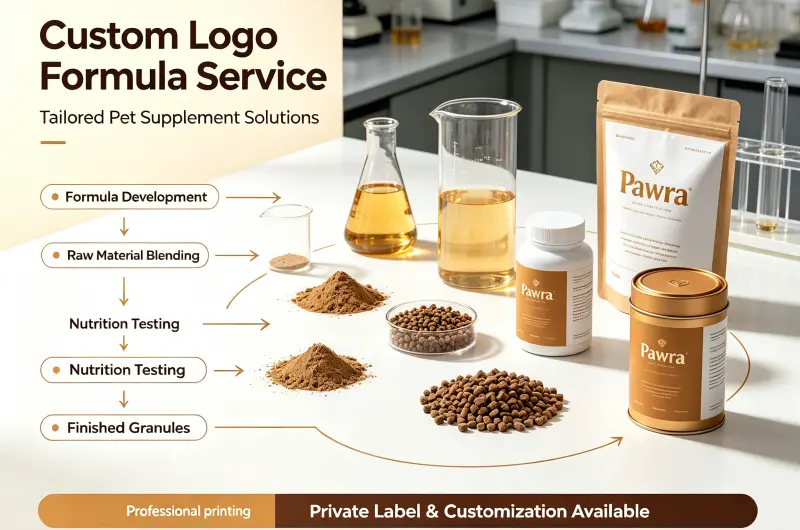
1. Customized Nutrition Solutions
- Custom Formula & Raw Material Selection for Different Pet Health Needs
- Personalized Flavor & Label Design to Match Your Brand
- Tailored Dosage & Potency for Specific Pet Groups
- Private Label Logo Printing & Packaging Customization
- Custom Product Specification & Outer Packaging to Enhance Brand Value
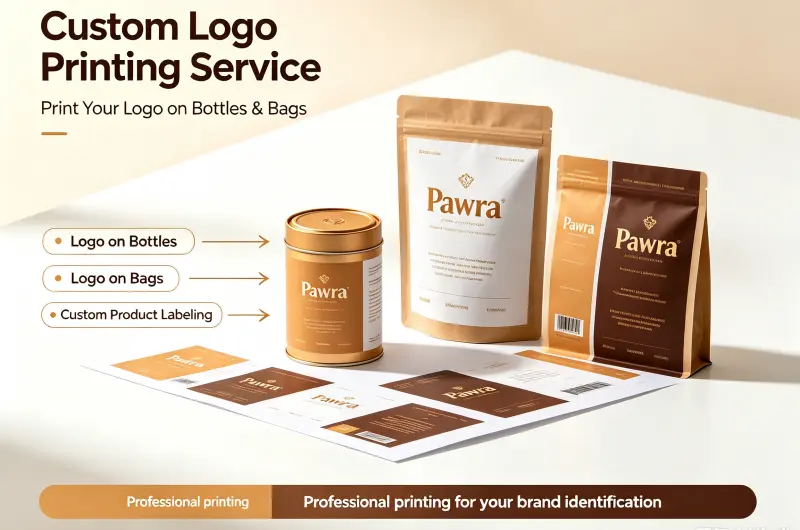
1. OEM and ODM Services
- Customized Logo & Label Printing for Brand Identification
- Personalized Flavor & Formula Customization for Brand Consistency
- Professional Packaging Design to Upgrade Product & Brand Value
- Tailored Supplement Dosage & Specifications for Various Market Needs
- Professional Raw Material & Formula Development for Safe & Reliable Efficacy
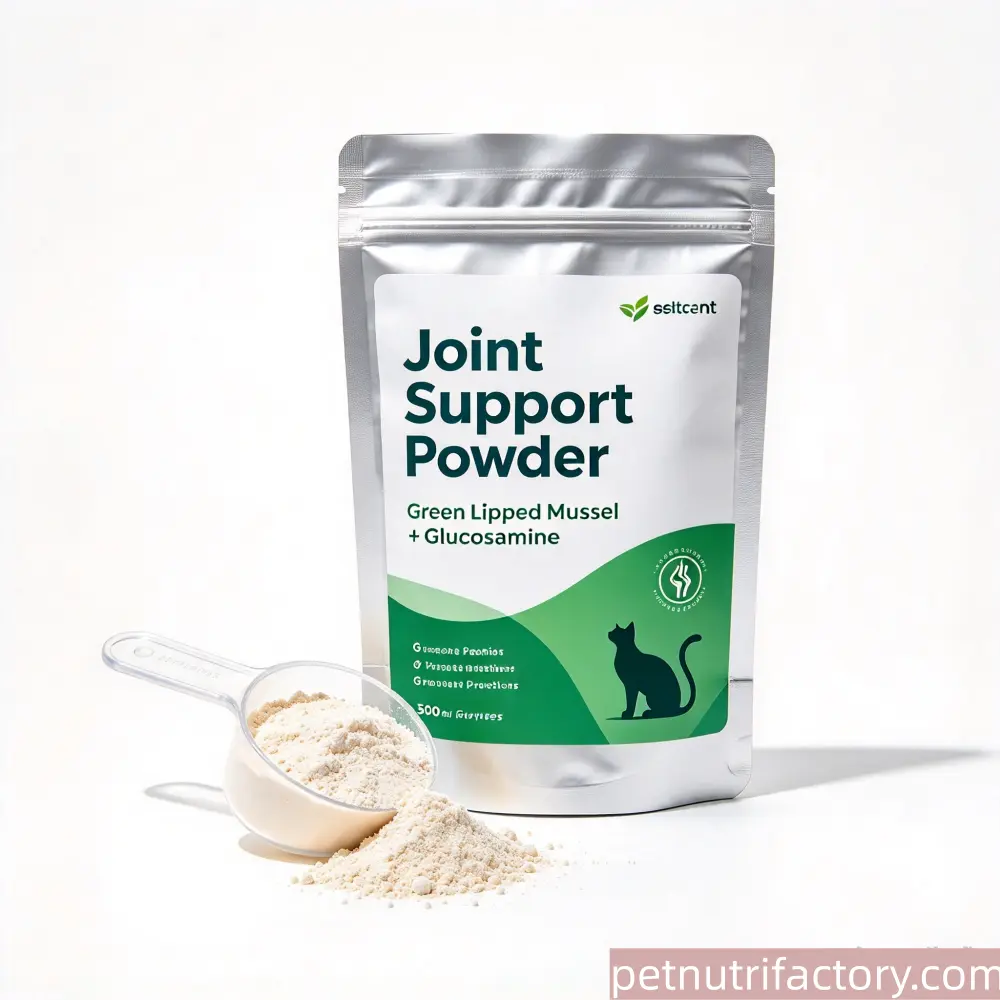
Joint Support Powder â OEM & ODM Manufacturing for Pet Joint Health Brands
PetNutriFactory is a China-based OEM and ODM manufacturer dedicated to pet nutritional supplements. This page is written for brand owners, distributors and private-label buyers who need a joint support powder built around their formula direction, target price band, packaging format and destination market â not a generic stock SKU with a different label.
We manufacture joint powders for dogs and cats in bulk, stick pack, sachet and jar formats, with custom formula adjustment, palatability engineering, private label packaging and batch-level documentation. If you are sourcing a joint support powder manufacturer that can move from formula brief to commercial production without passing you between third parties, the sections below describe exactly what we control in-house and what we need from you to quote.
Why Joint Support Powder Is a Format Worth Building a SKU Around
The joint supplement category is no longer a veterinary-adjacent niche. It has moved into mainstream pet retail and DTC channels, and powder is one of the formats benefiting most from that shift. The global dog and cat joint health supplement market was estimated at roughly US$53 billion RMB scale in 2025, with forecasts placing 2026â2032 CAGR in the 6.6%â7.1% range depending on scope and methodology[reference:1]. Joint and mobility products are the most popular supplement category among U.S. dog owners, with 53% of dog owners reporting supplement use in 2024[reference:2].
Powder occupies a specific strategic position inside that growth. It is the format that best fits the âmix into foodâ daily routine â no chewing resistance, no pill refusal, and dose flexibility by body weight. Industry formulation commentary consistently identifies palatability and taste masking as non-negotiable in powder dosage forms, and microencapsulation and delivery-system work are being applied specifically to protect actives and improve acceptance in powdered supplements[reference:3]. For a brand, powder also offers a lower per-serving packaging cost than soft chews or tablets at comparable active load, which matters when you are building a price ladder across entry, mid and premium tiers.
For an OEM/ODM buyer, the practical question is not whether the category grows. It is whether your manufacturing partner can translate a formula concept into a stable, palatable, compliant powder at your target cost â and repeat it batch after batch. That is the capability this page documents.
OEM vs. ODM: Two Distinct Engagement Models, One Factory
We deliberately distinguish between OEM and ODM because the two models require different inputs from you and place different responsibilities on us. Many suppliers use the terms interchangeably; in practice, the boundary determines how much formula IP you own, how fast the project moves and where the cost sits.
OEM: Your Formula, Our Manufacturing
In the OEM model, you bring an established formula, a target active profile or an existing product you want replicated or improved. We review the formula for processability, scaling behaviour and ingredient availability, then manufacture to your specification under our quality system. You retain formula ownership and brand control. This is the right model if you already sell a joint powder and need a second source, a lower-cost production base or additional capacity without reformulating.
What we handle in this model: raw material sourcing against your approved specification, batch production, in-process and finished-product testing, packaging to your artwork, and export documentation. What stays with you: formula definition, label claims and marketing positioning. We will flag compliance issues we see in your label or formula, but final sign-off remains yours.
ODM: Formula Development to Finished Product Under Your Brand
In the ODM model, you provide the commercial brief â species, target market, price band, desired claims direction, packaging preference â and our R&D team develops the formula, selects the actives and carriers, builds the palatability system, and delivers a production-ready powder under your brand. You review and approve samples; we own the development path from brief to bulk.
This is the faster route for brands entering the joint powder category without an in-house formulation team, or for distributors building a private-label range across multiple supplement formats. Because we develop the formula on our own platform, development timelines are shorter and the cost of formula work is absorbed into the production relationship rather than billed as a separate R&D project. The trade-off is that the base formula may also be available to other clients in non-identical configurations; exclusivity terms are available and scoped case by case.
Joint Powder Formulation Capability: What We Can Build and Adjust
Joint powder formulation is not a single recipe. It is a set of decisions across active layers, carrier systems, palatability and cost. Our ODM work is organised around those decision layers so that you can see exactly where customisation happens and what drives cost.
Active Ingredient Architecture
We formulate across the standard joint-support actives: glucosamine (HCl or sulfate), chondroitin sulfate, MSM, green-lipped mussel, hydrolysed collagen, UC-II undenatured type II collagen, hyaluronic acid, vitamin C and manganese. The formulation question is not which ingredients to include â most buyers know the list â but at what dose, in what ratio, and with which source, given your target market and cost ceiling.
For example: a mass-retail entry SKU may use a glucosamineâchondroitinâMSM base with a cost-efficient carrier. A premium DTC brand targeting ânaturalâ positioning may move to a green-lipped musselâcollagen direction with a shorter ingredient legend. A veterinary-channel product may require a UC-II or hyaluronic acid anchor at a dose that supports a structure/function claim in the destination market. We map these routes with you at brief stage and quote against the route you choose, rather than quoting a single fixed formula and asking you to fit your brand around it.
Carrier and Palatability System
In powder, the carrier is not inert. It determines flowability, dose uniformity, mixing behaviour in wet or dry food, and â critically â whether the pet accepts the product. We treat palatability as a formulation layer, not an after-the-fact flavour addition. Our development process includes selection of protein-based carriers, yeast-derived savoury notes, natural flavour systems and masking approaches appropriate to the actives in the formula. Where an active has a strong inherent taste or odour, we evaluate masking and encapsulation options before locking the formula, because reformulating after palatability failure is more expensive than designing for acceptance upfront.
Powder-Specific OEM/ODM Customisation: Dose, Format, Packaging, MOQ
Powder is a format with its own manufacturing logic. The decisions below are the ones that most often determine whether a joint powder SKU is commercially viable, and they are the dimensions where an experienced private label joint powder manufacturer adds value beyond filling and labelling.
Dose and Serving Architecture
We can develop the powder around a fixed daily scoop, a weight-banded dosing table, or a stick-pack format where each sachet is one serving. The choice affects cost per day, packaging cost and the consumerâs perception of convenience. We quote against a cost-per-serving view rather than only a cost-per-kilogram view, because that is the number your brand will ultimately price against. For multi-dog households and large-breed SKUs, bulk jar formats with a scoop often deliver a better cost-per-day story; for trial packs and subscription models, stick packs reduce friction.
Packaging Formats and Private Label Support
We support jar, pouch, stick pack and bulk bag formats. Private label scope covers label layout, ingredient and guaranteed analysis panel formatting, batch and best-by coding, and packaging artwork adaptation to your brand system. We do not operate as a design agency, but we do review label content for consistency with the formula and flag claim language that may create compliance exposure in your target market. This is part of the ODM service, not a separate line item.
MOQ and Trial Order Structure
We structure MOQ around the development stage rather than applying a single large-volume threshold to every buyer. Trial and sample orders are supported so that you can validate palatability, stability and packaging before committing to a bulk run. Bulk MOQ is then set according to formula complexity, packaging format and raw material procurement lead times. Exact thresholds are confirmed at quote stage because a stick-pack SKU and a bulk jar SKU have different economic minimums even when the powder inside is identical. If you are comparing low MOQ joint supplement options across suppliers, ask for the MOQ at your specific packaging format â not the factoryâs headline number.
Quality System and Compliance Documentation
For a B2B buyer, the quality question is not âdo you have certificates.â It is âwhat documentation will I receive with each batch, and will it hold up if my customer or a regulator asks.â We operate an FDA-registered facility with cGMP-aligned production controls and a quality inspection system applied at each production stage[reference:4]. The compliance landscape for pet supplements is not uniform: the U.S. market operates under AAFCO frameworks and FDA cGMP expectations, while the EU follows FEDIAF standards, and destination-market requirements for labeling, permitted ingredients and claims vary accordingly[reference:5].
Our documentation package for joint powder orders typically includes a certificate of analysis covering identity, active content, heavy metals and microbiological parameters, batch production records traceable to raw material lots, and label content review notes. Where a destination market requires additional testing or declaration, we scope that at quotation stage rather than after production. We also maintain supplier qualification files for key joint-specific raw materials â glucosamine, chondroitin, green-lipped mussel and collagen â because source variability in these ingredients is one of the structural quality risks in this category. A cGMP pet supplement manufacturer should be able to show you how raw material lots are linked to finished batches; we build that linkage into the batch record by default.
From Brief to Bulk: The OEM/ODM Project Path
We run joint powder projects through a defined sequence so that responsibilities and decision points are clear before money is committed.
Step 1 â Brief and feasibility review. You share species, target market, desired actives or claims direction, packaging format and indicative volume. We respond with a formula route recommendation and a cost-per-serving indication.
Step 2 â Formula development and sample. For ODM projects, we develop the powder and produce a sample for your review. For OEM projects, we review your formula and produce a pilot batch against it. Palatability and mixing behaviour are assessed at this stage.
Step 3 â Specification lock and quote. Once the sample is approved, we lock the formula, packaging specification, testing scope and MOQ, and issue a firm quotation.
Step 4 â Bulk production and documentation. Production runs against the locked specification. Batch records, COA and label review notes are issued with the shipment.
This sequence is deliberately front-loaded: most cost overruns in supplement OEM come from specification changes after bulk production begins, not from the per-kilogram price.
Why Brands Work with PetNutriFactory as Their Joint Powder OEM/ODM Partner
We are a manufacturer, not a trading company. Formula development, powder production, packaging and documentation sit inside the same operation, which means the person who quotes your project is working from the same production reality as the line that will run it. Our existing OEM and ODM engagements span chewable tablets, powders and liquid formulas, and clients consistently point to formula adjustment responsiveness and label/packaging coordination as the practical difference in the relationship[reference:6]. For joint powder specifically, that translates into three things a buyer can verify: a clear OEM-vs-ODM scope, a palatability-inclusive formulation process, and batch-level documentation that travels with the product.
If you are evaluating pet joint supplement OEM partners and want a joint powder scoped against your market and price band, send your brief. We will respond with a formula direction, a packaging recommendation and a cost-per-serving estimate â not a generic catalogue.
Start Your Joint Support Powder Project
Send us your target market, species, desired actives or claims direction, packaging preference and indicative first-order volume. We will come back with a feasibility assessment and a quote structure within two business days.