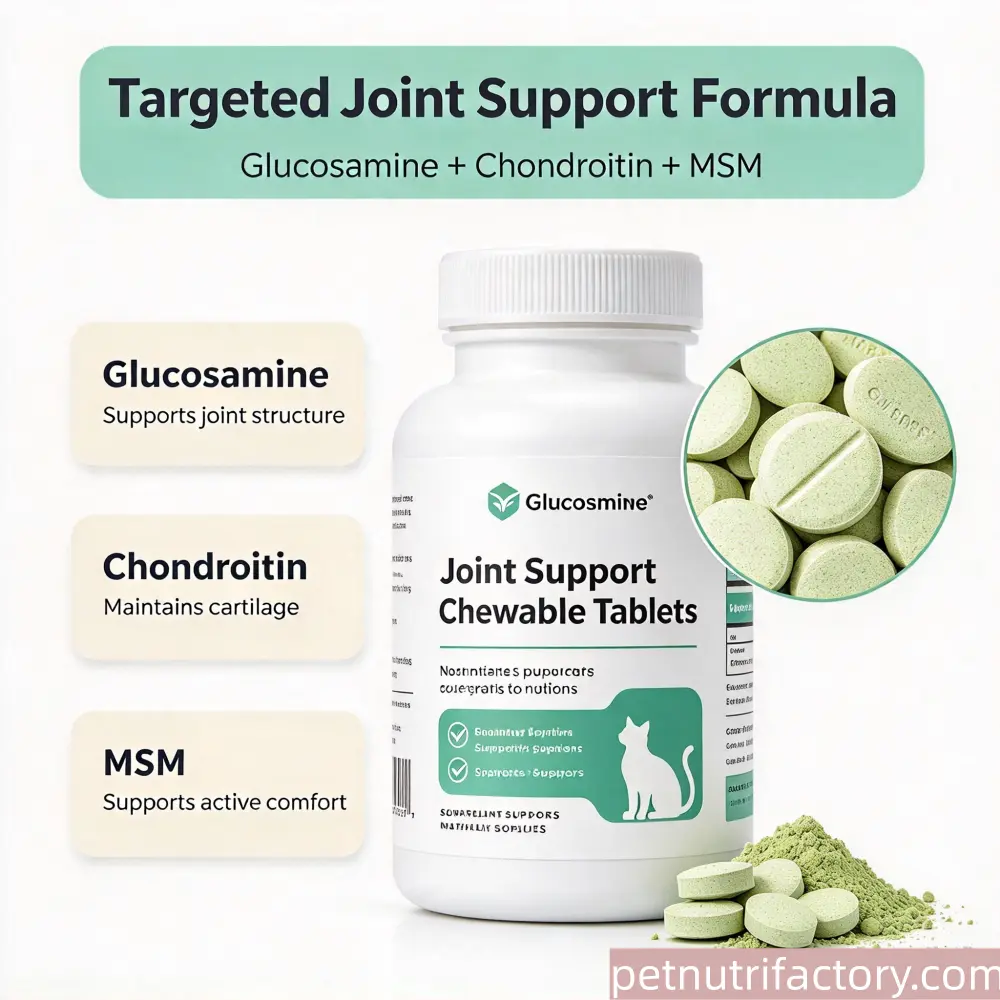
Joint Support Chewable Tablets
- Model No.: JOINT-3002
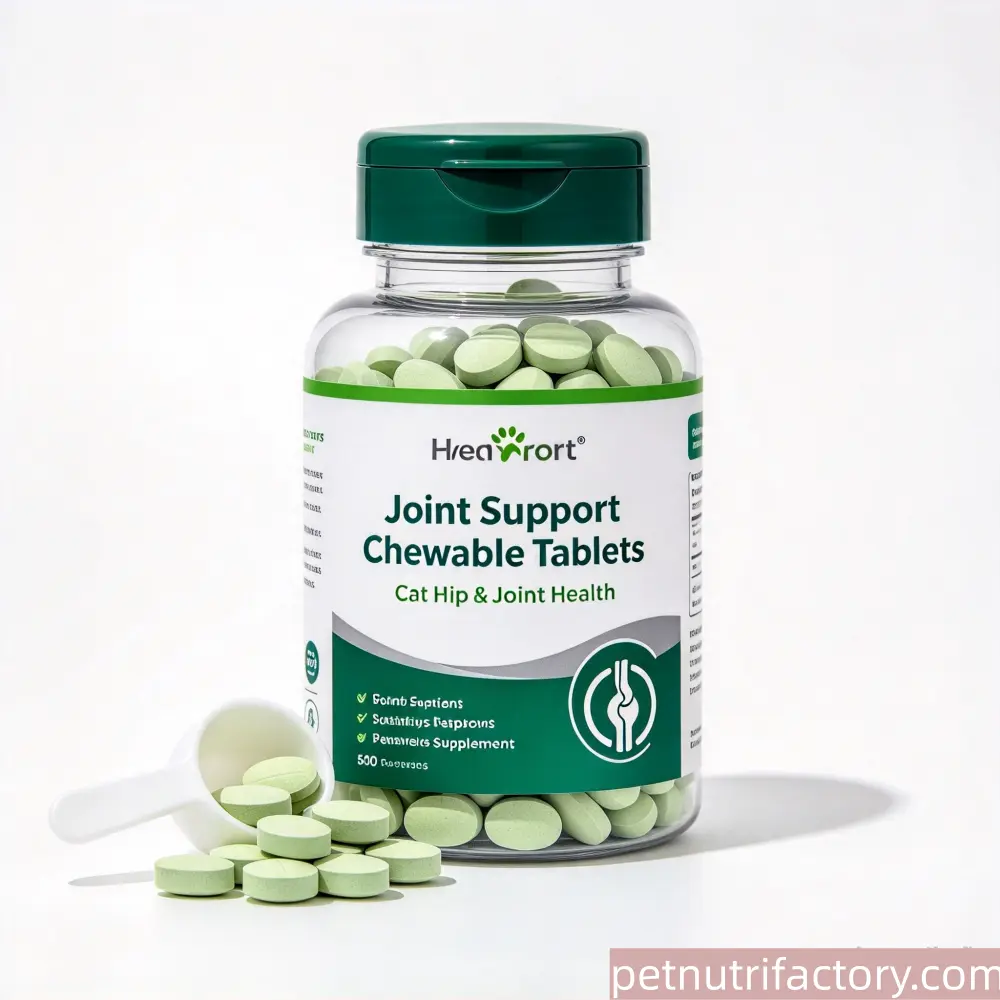
- Product Name: Joint Support Chewable Tablets
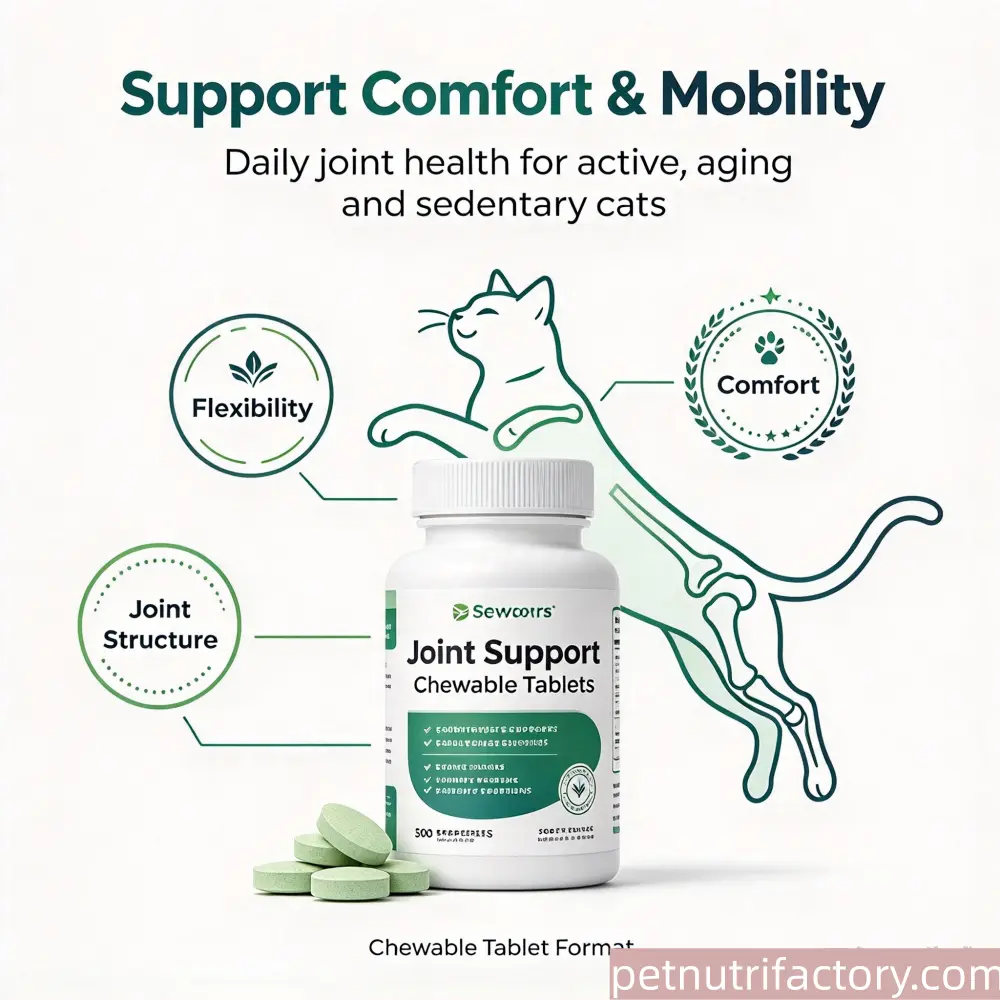
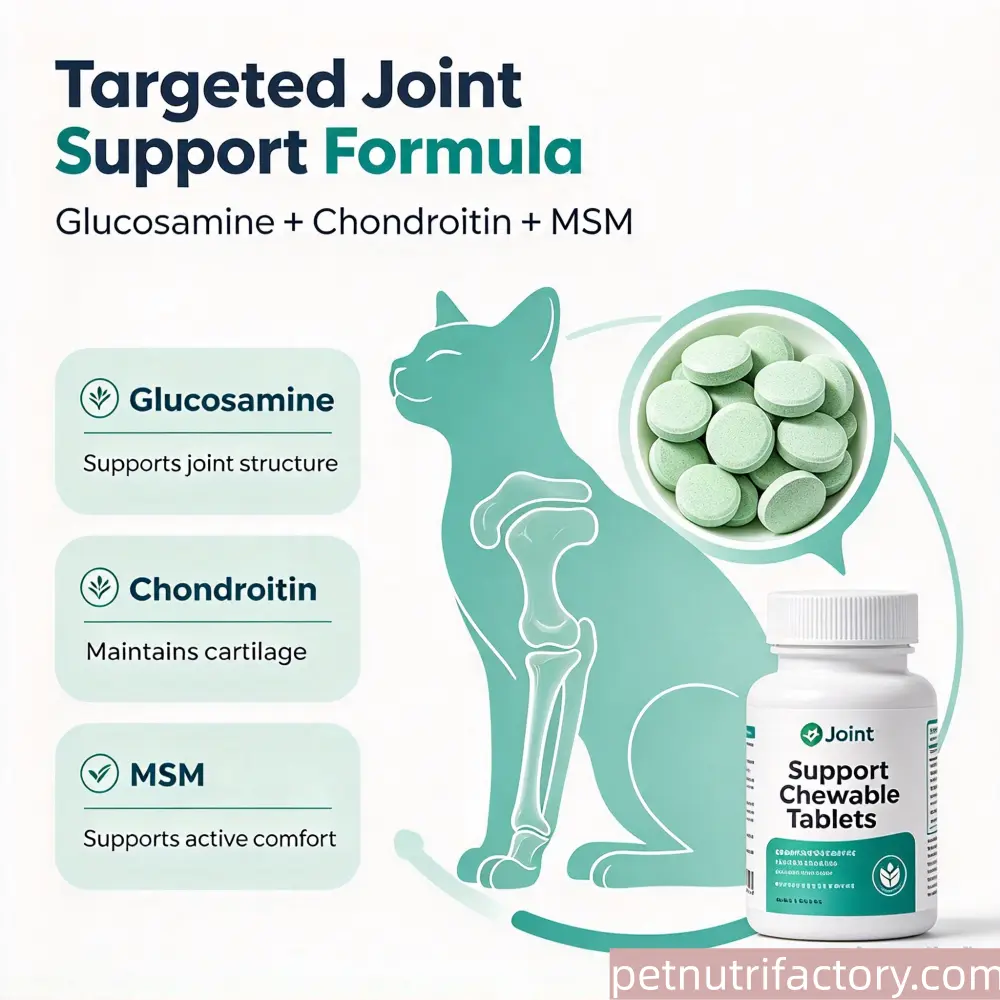
- Formulated with Glucosamine & Chondroitin to support joint health
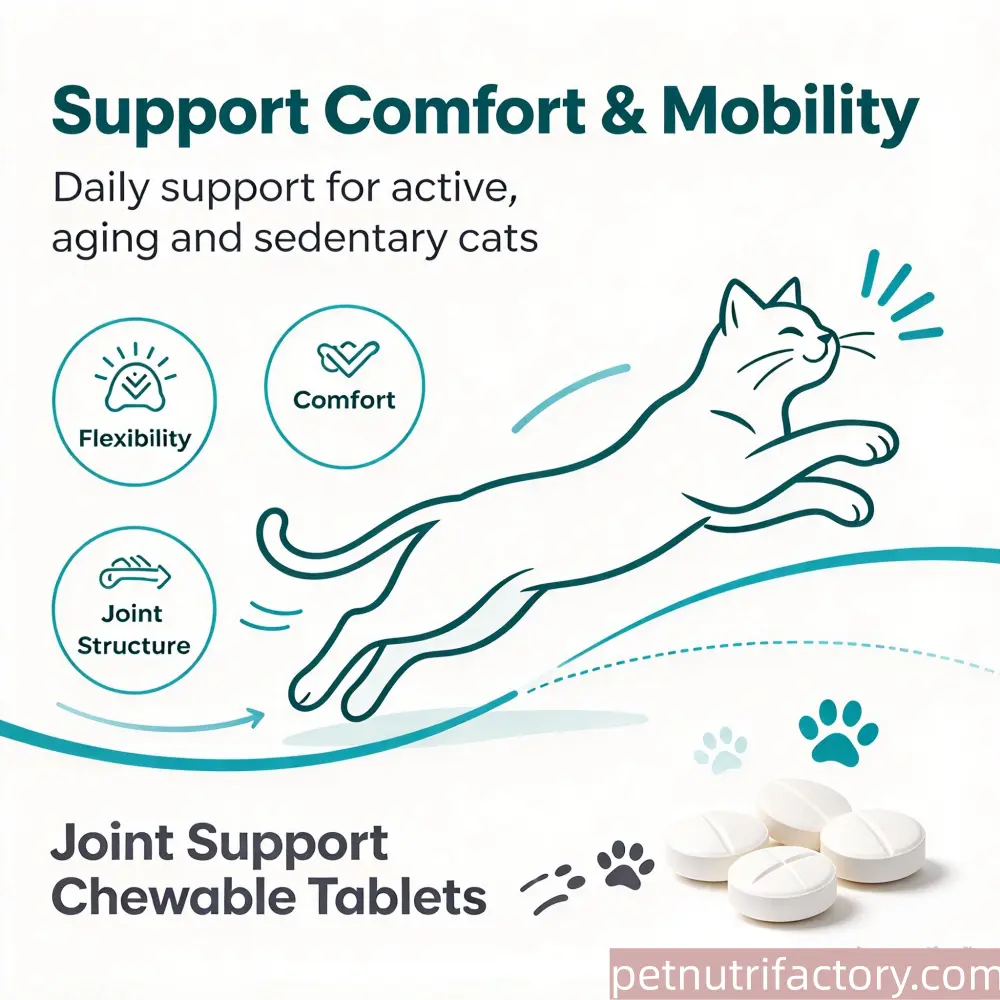
- Helps maintain flexibility and ease joint stiffness for cats and dogs
- Nourishes cartilage and protects joint cushioning structure
- Ideal for senior pets and active pets with high exercise load
- All-natural formula, free from artificial colors and preservatives
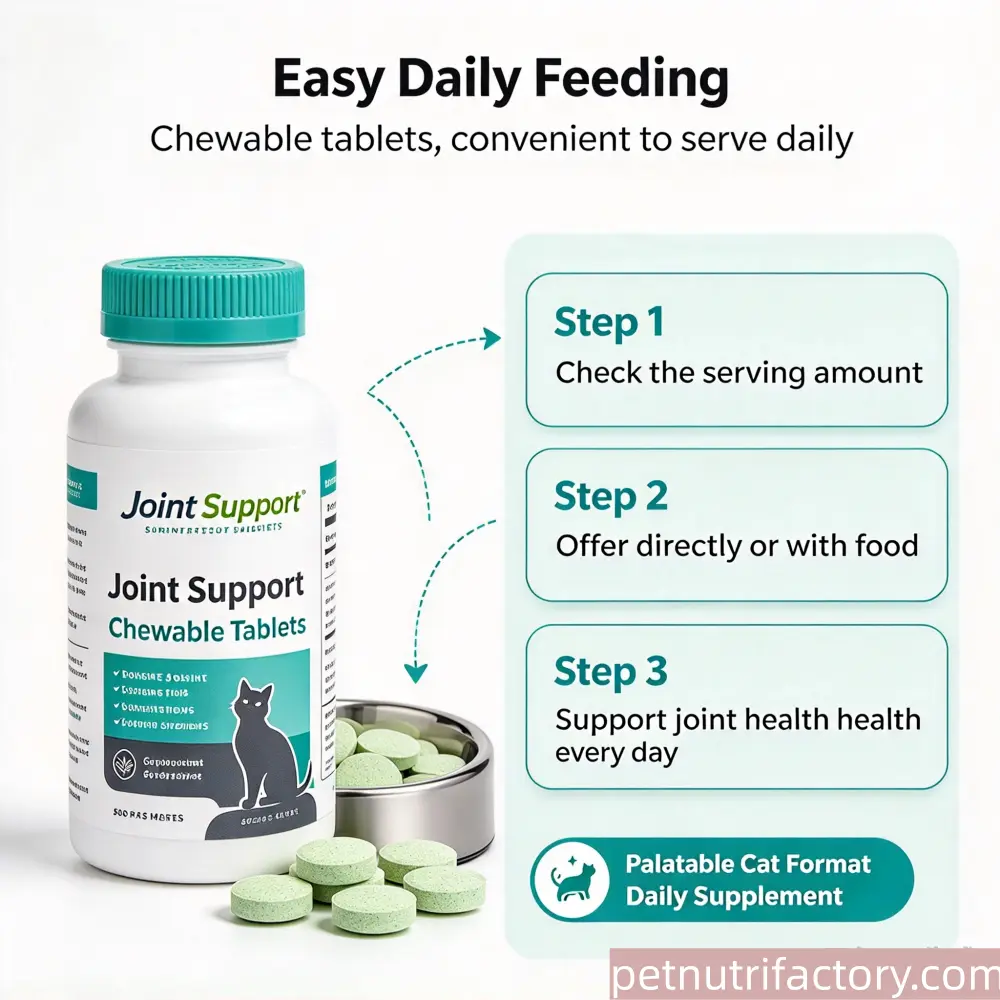
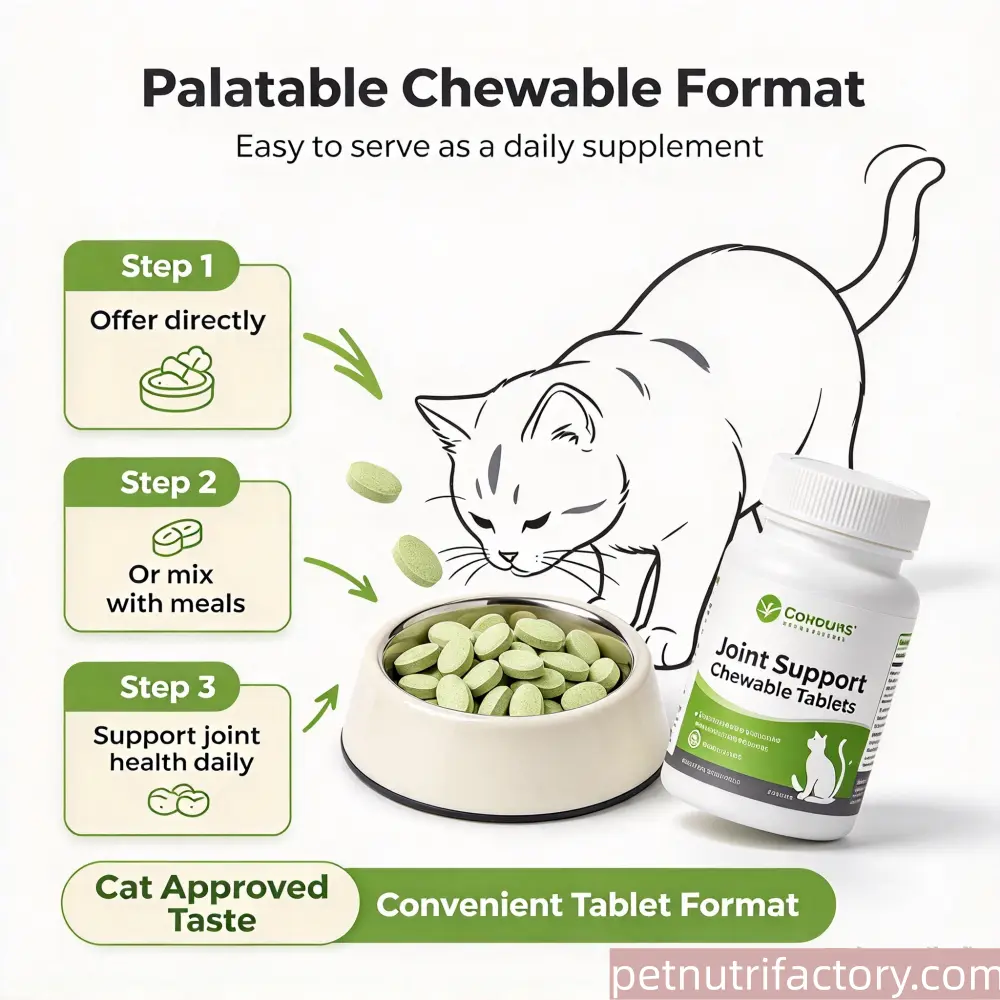
- Tasty chewable tablets, easy to feed directly or mix with pet food
Customization Services
- Custom Formula & Raw Material Selection for diverse pet health and nutritional requirements
- Personalized flavor, color and graphic design to fit your brand positioning
- Custom dosage and potency for targeted pet groups and market levels
- Private label logo printing & custom packaging surface treatment
- Custom product shape, specification and packaging solution to boost brand image
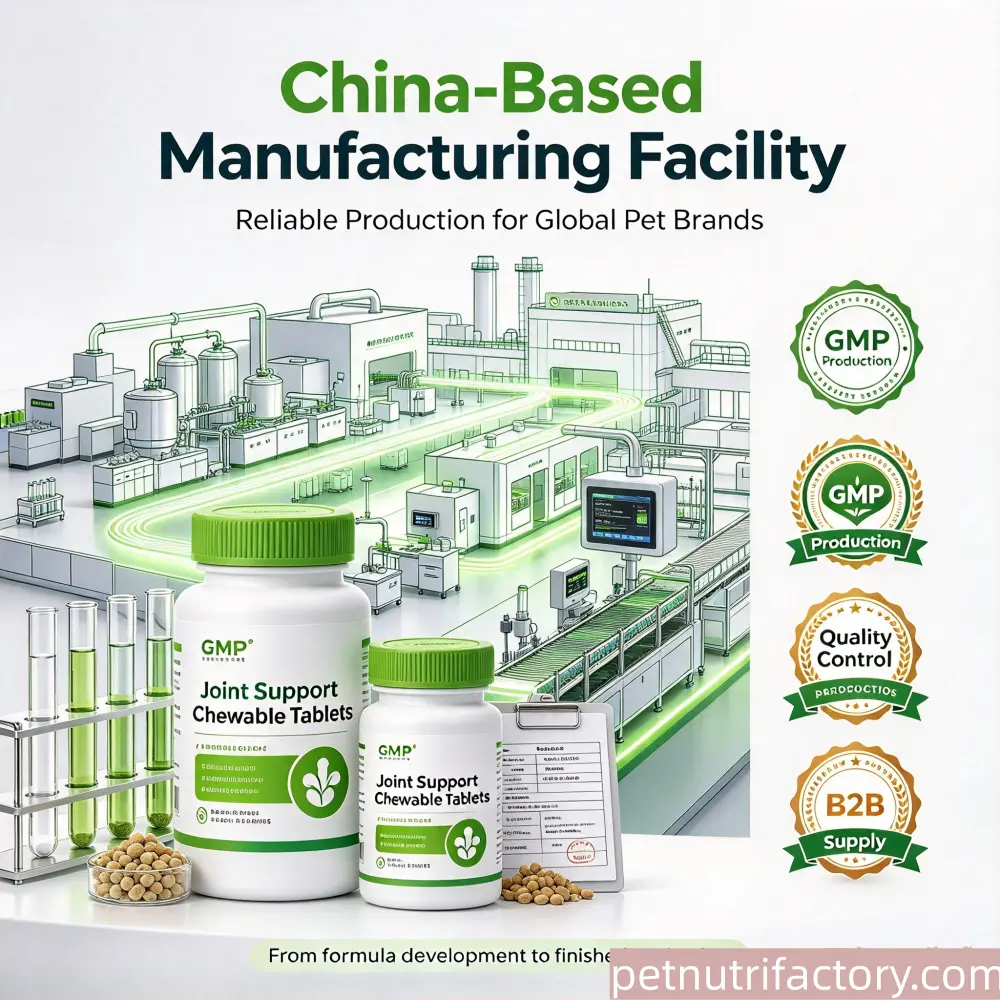
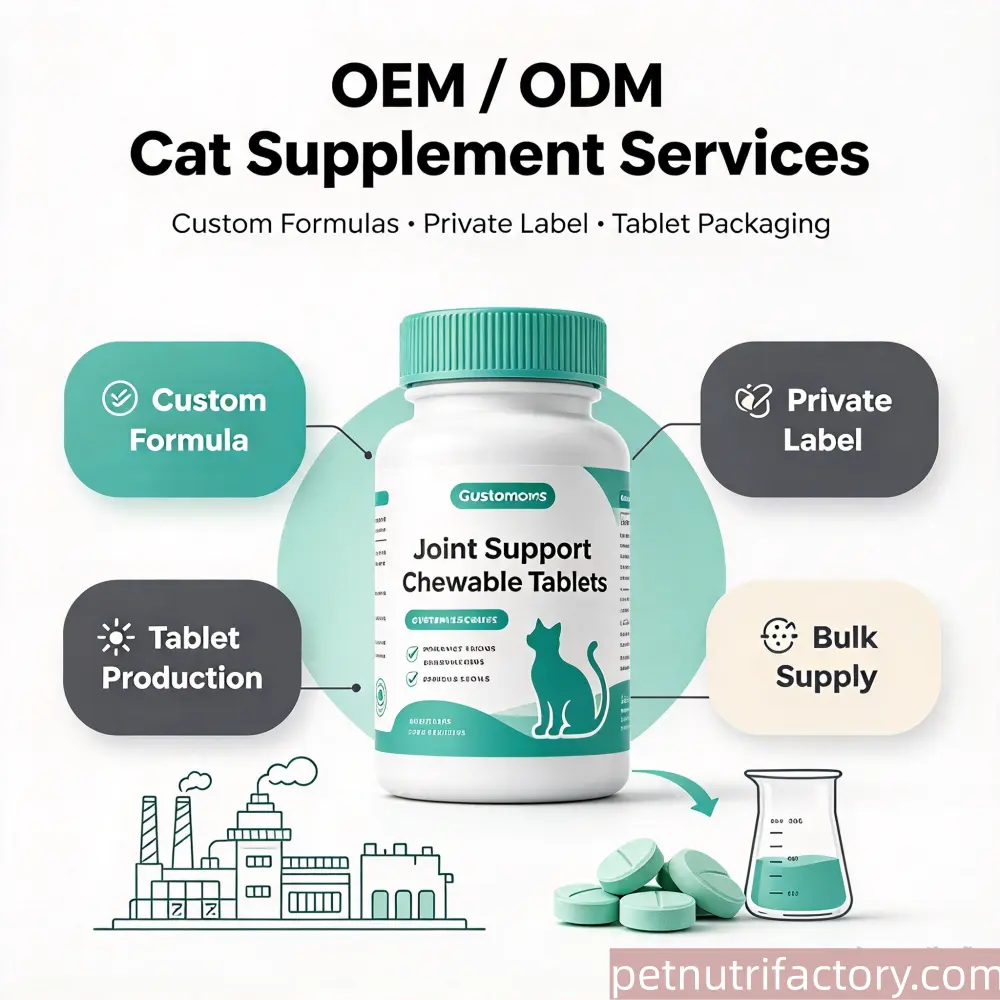
Joint Support Chewable Tablets for Dogs and Cats
Joint Support Chewable Tablets are a pet nutritional supplement developed for brands looking to expand their product portfolios with joint health and mobility support solutions. Formulated with glucosamine and chondroitin, this product is designed to support normal joint function and help maintain mobility and flexibility in dogs and cats. The convenient chewable tablet format offers a practical feeding option for pet owners while providing manufacturers, distributors, wholesalers and importers with a versatile product concept for the companion animal nutrition market.
Pet Nutri Factory supports B2B businesses seeking pet supplement products for their own brands and distribution channels. Model JOINT-3002 provides a starting point for developing a joint-support product with a recognizable ingredient combination and convenient dosage format. Buyers can evaluate the product specification, discuss packaging requirements and explore suitable OEM, ODM and private label manufacturing arrangements according to their business needs.
Joint health is an important consideration in pet nutrition, particularly for products intended for senior animals and active pets. Glucosamine and chondroitin are commonly used together in joint-support supplements because of their association with cartilage and connective tissue. When incorporated into an appropriately formulated product, these ingredients can support a nutritional approach to maintaining normal joint function. The final formula, ingredient concentrations and recommended serving instructions should be confirmed before the product is commercialized.
For B2B buyers, a successful joint supplement requires more than an attractive product name. Ingredient specifications, tablet dimensions, palatability, serving instructions, quality documentation and packaging compatibility all contribute to the suitability of the finished product. A clearly defined specification helps buyers assess samples, establish quality expectations and plan future production with greater confidence.
Product Overview
Model No.: JOINT-3002. Product Name: Joint Support Chewable Tablets. Product Category: Pet Nutritional Supplements. Target Animals: Dogs and Cats, subject to final formula suitability. Dosage Form: Chewable Tablets. Key Ingredients: Glucosamine and Chondroitin. Primary Application: Joint Health and Mobility Support. Manufacturing Options: OEM, ODM and Private Label, subject to confirmation of project requirements.
JOINT-3002 is positioned as a joint-support nutritional supplement for companion animals. The formula focuses on two established ingredients in the joint supplement category, offering a straightforward foundation for product development and brand positioning. The chewable tablet format is designed to simplify daily administration and can be evaluated for direct feeding or use with regular pet food, depending on the final formulation and approved feeding directions.
The product concept can be relevant to brands serving different segments of the pet nutrition market, including senior pet care, everyday joint maintenance and active pet wellness. The final target audience should be determined according to the approved formula, recommended serving size and available supporting evidence. Product descriptions should communicate nutritional support accurately and avoid unsupported claims about treating joint disease or guaranteeing specific results.
For distributors and private label brands, JOINT-3002 offers a potential addition to an existing pet supplement range. Buyers can assess the ingredient profile, tablet characteristics, packaging format and commercial terms before deciding whether the product fits their target market. The final specification should be documented and approved before a bulk manufacturing order is confirmed.
Key Product Features
Glucosamine for Joint Health Support
Glucosamine is widely used in nutritional products developed for joint health support. It is associated with the formation and maintenance of cartilage and other connective tissues. In companion animal supplements, glucosamine is commonly included as part of a nutritional approach intended to support normal joint function and mobility.
For JOINT-3002, glucosamine serves as one of the principal ingredients supporting the product's joint health positioning. Its recognizable role in the joint supplement category can help brands communicate the intended purpose of the product to distributors, retailers and consumers. The nutritional contribution of glucosamine depends on its source, concentration, the complete formulation and the recommended daily serving.
B2B buyers should confirm the glucosamine source and specification before approving the finished product. Relevant considerations include the amount per tablet, ingredient quality documentation and the suitability of the proposed concentration for the intended target animals. These details help buyers compare alternative formulations and determine whether the product meets their technical and commercial requirements.
For private label projects, the glucosamine concentration should be considered alongside the total tablet weight and recommended serving instructions. Any adjustment to the formula should be assessed for manufacturing feasibility, ingredient compatibility, palatability, stability and cost. A clear ingredient specification provides a useful foundation for consistent production and future reorders.
Chondroitin for Cartilage Support
Chondroitin is another commonly used ingredient in pet joint supplements. It is associated with cartilage structure and is frequently combined with glucosamine in formulations designed to support normal joint function. The combination offers a familiar ingredient profile for businesses developing products in the joint health category.
In JOINT-3002, chondroitin complements glucosamine as part of the proposed joint-support formulation. This combination provides a clear starting point for product positioning and allows buyers to evaluate the formula against their own product development criteria. The final ingredient levels should be confirmed through the approved product specification.
Commercial buyers should request information about the chondroitin source, concentration and relevant quality documentation. These details are useful when comparing suppliers, establishing product specifications and preparing technical information for distribution partners. Ingredient documentation should correspond to the actual materials used in the approved formula.
Statements concerning cartilage nourishment or joint cushioning should be supported by appropriate evidence and reviewed for compliance with the destination market's requirements. The inclusion of glucosamine and chondroitin does not automatically establish a specific clinical outcome. Product communication should accurately reflect the evidence available for the finished formulation.
Joint Support for Senior Dogs and Cats
As companion animals grow older, maintaining normal mobility and joint function becomes an important consideration in their overall care. Senior pet nutrition products are often developed to complement balanced feeding routines and support general wellbeing. A joint-support supplement may form part of this approach when its formulation and feeding instructions are appropriate for the intended animal.
JOINT-3002 provides a product concept for brands interested in the senior pet nutrition segment. Its glucosamine and chondroitin combination supports a clear joint health positioning, while the chewable tablet format offers a convenient option for daily supplementation. The suitability of the finished product for senior dogs and cats should be confirmed through formula review and appropriate serving guidance.
For B2B buyers, senior pet positioning should be reflected in the final product specification and marketing materials. Ingredient concentrations, tablet size, recommended serving instructions and any relevant limitations should be reviewed before the product is promoted for a particular age group. Specific age-related or condition-related claims should be supported by suitable evidence and comply with applicable regulations.
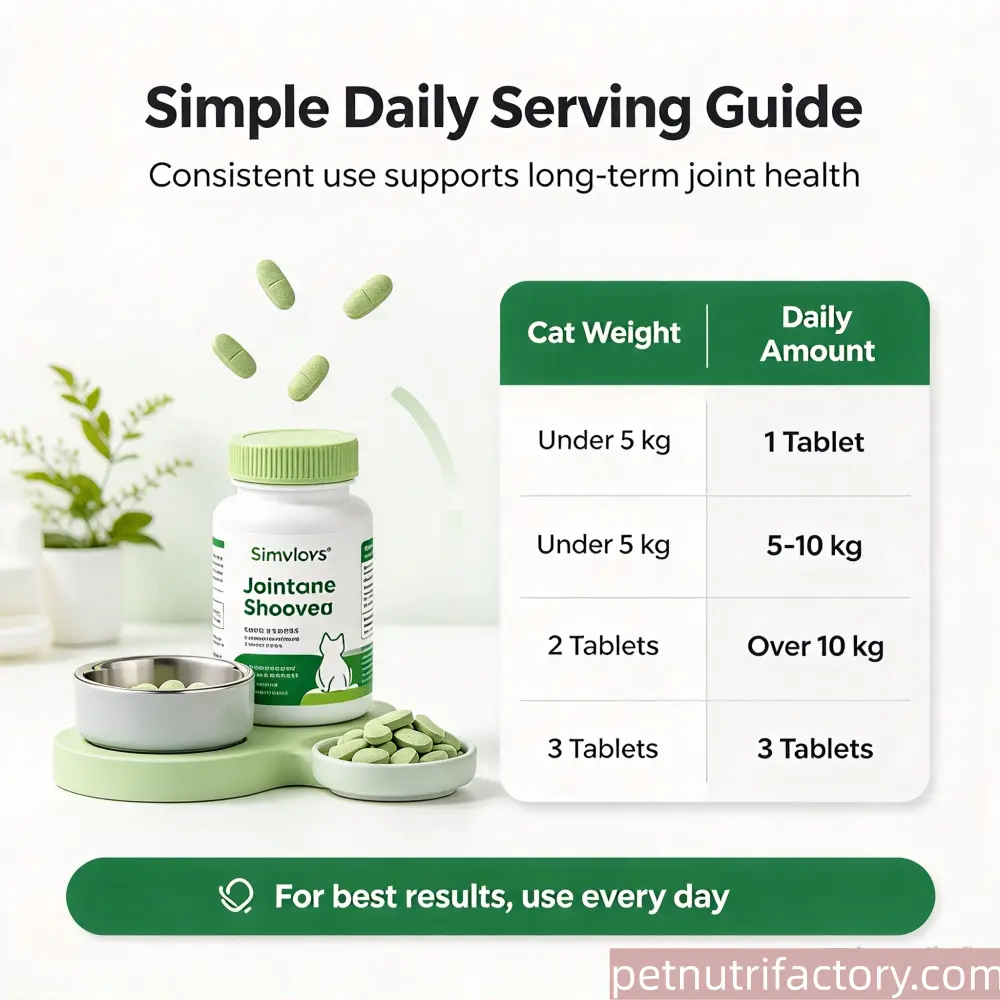
Clear feeding instructions can help customers incorporate the product into a regular feeding routine. Where the product is intended for animals of different sizes, the recommended serving guidance should address the relevant differences rather than assuming that the same amount is suitable for every dog or cat.
Joint Nutrition for Active Pets
Active dogs and cats may place different demands on their bodies depending on their activity levels, exercise routines and general condition. Dogs that regularly run, hike, train or participate in sporting activities may benefit from an overall nutritional plan that supports normal musculoskeletal function. Cats also use their joints during jumping, climbing and everyday play.
JOINT-3002 can be considered by brands developing joint-support products for active pets. Its ingredient profile provides a foundation for a nutritional product positioned around maintaining normal joint function and mobility. The chewable format also offers a practical way to incorporate supplementation into a regular feeding routine, subject to the final formula and feeding instructions.
Product positioning for active animals should remain accurate and evidence-based. A nutritional supplement should not be promoted as preventing injuries, guaranteeing improved athletic performance or replacing appropriate veterinary care. Buyers should confirm that the intended claims are supported by the finished product's formulation and permitted in the destination market.
For distributors and retailers, active pet nutrition can be a distinct segment within a broader supplement portfolio. Buyers can assess whether a joint-support chewable tablet fits their existing product range and customer requirements. Tablet size, palatability, packaging and serving instructions should all be considered when evaluating its commercial suitability.
Chewable Tablet Format and Feeding Convenience
The chewable tablet format is a central feature of JOINT-3002. Tablets provide a defined dosage unit that can be counted, packaged and described through clear feeding instructions. For pet supplement brands, this format offers a practical alternative to powders, capsules and liquids, depending on the needs of the intended market.
Chewable tablets require careful consideration of size, texture, hardness, flavor and physical stability. These characteristics can influence handling, packaging and acceptance by pets. The final tablet should be evaluated against the intended formula and target animals to determine whether the format provides a practical feeding experience.
The proposed product is intended for direct feeding or mixing with pet food, subject to the finished formulation and approved instructions. Buyers should review tablet dimensions and serving requirements, particularly when the product is intended for both dogs and cats. The final product specification should clearly explain the appropriate method of administration.
Palatability is an important development consideration. Dogs and cats may respond differently to the same flavor and texture, so acceptance should not be assumed based on the ingredient list alone. Depending on the project, buyers may request samples to evaluate the tablet's appearance, odor, texture and practical suitability before placing a commercial order.
Packaging must protect the tablets during storage and transport. Container compatibility, closure performance and moisture protection should be evaluated according to the characteristics of the finished product. The final packaging configuration should balance product protection, retail presentation, cost and distribution requirements.
Product Specifications
The following table summarizes the proposed specifications for JOINT-3002. Quantitative details should be confirmed against the approved formula and manufacturing documentation before commercial production.
| Specification | Product Information |
|---|---|
| Model Number | JOINT-3002 |
| Product Name | Joint Support Chewable Tablets |
| Product Category | Pet Nutritional Supplements |
| Target Animals | Dogs and Cats, subject to formula suitability |
| Dosage Form | Chewable Tablets |
| Key Ingredients | Glucosamine and Chondroitin |
| Primary Product Positioning | Joint Health and Mobility Support |
| Feeding Method | Direct feeding or mixing with pet food, according to approved instructions |
| Artificial Colors | Excluded according to the stated product specification |
| Artificial Preservatives | Excluded according to the stated product specification |
| Ingredient Concentrations | To be confirmed against the approved formula |
| Tablet Weight and Dimensions | To be confirmed |
| Recommended Serving Size | To be established according to the final formula and target species |
| Flavor Profile | To be confirmed |
| Packaging | Subject to buyer requirements and packaging availability |
| Shelf Life | To be confirmed through appropriate stability assessment |
| Manufacturing Options | OEM, ODM and Private Label, subject to confirmation |
Ingredient Quality and Formula Development
Ingredient quality is essential when developing a reliable pet nutritional supplement. For JOINT-3002, the specifications of glucosamine and chondroitin should be established before the formula is approved. Ingredient source, identity, concentration, purity and relevant quality records can all influence the suitability of the finished product.
For B2B buyers, technical documentation provides a basis for comparing suppliers and assessing the proposed formula. Depending on the ingredients and project requirements, relevant records may include ingredient specifications, certificates of analysis and other quality documents. Buyers should confirm the availability and scope of each document rather than assuming that all suppliers provide the same information.
Formula development should also consider ingredient compatibility, tablet processing requirements, palatability and stability. A formula that looks suitable on paper may require further evaluation to achieve the desired tablet characteristics and consistent production results. These factors should be reviewed before the product specification is finalized.
For private label products, an approved formula should be documented clearly. The specification should identify the agreed ingredients, concentrations and relevant finished-product characteristics. Any proposed changes to ingredients, suppliers or processing methods should be reviewed through an agreed change-control process.
Manufacturing Quality Control
Consistent manufacturing depends on documented product specifications and suitable quality control procedures. For JOINT-3002, relevant checks may include ingredient verification, tablet appearance, weight consistency, physical integrity, packaging condition and other parameters appropriate to the finished formula.
The exact testing plan should be determined according to the product, manufacturing process, applicable regulations and buyer requirements. Buyers should confirm which checks are performed, which records are available and whether additional testing is required before shipment. Any testing requirements beyond the standard production process should be agreed in advance.
Finished-product testing serves a different purpose from raw material documentation. Ingredient records describe particular raw materials or batches, while finished-product testing evaluates specified characteristics of the manufactured supplement. Buyers should identify the quality evidence needed for their own quality assurance procedures and destination markets.
Stability assessment is also important when establishing the product's shelf life. The formula, packaging materials, closure system and recommended storage conditions may influence product stability. Shelf-life information and storage instructions should therefore be supported by appropriate documentation.
For importers and distributors, clear quality records can support supplier evaluation and product approval. Product specifications, ingredient information, packaging details and relevant test results should correspond to the actual product supplied. Buyers should also confirm any additional documentation required for importing or marketing the product in their target markets.
OEM Joint Supplement Manufacturing
OEM manufacturing allows pet supplement brands to develop products under their own branding based on an agreed specification. For JOINT-3002, an OEM project may involve confirming the glucosamine and chondroitin formula, reviewing tablet characteristics, establishing serving instructions and selecting suitable packaging.
Pet Nutri Factory's B2B product positioning is intended to support businesses seeking manufacturing solutions for pet nutritional products. Buyers can begin by outlining their target market, preferred ingredient profile, expected order quantity and packaging requirements. This information helps define the project and establish the technical details that need to be confirmed.
Private label buyers should clarify whether the proposed product specification meets their requirements or whether adjustments are needed. Changes to ingredient concentrations, tablet dimensions, flavor or packaging should be assessed for manufacturing feasibility, product stability, regulatory compliance and commercial cost.
Branding and packaging requirements should be discussed early in the process. Custom labels, printed containers, cartons and other packaging components may have separate minimum quantities and lead times. These requirements should be confirmed before the final quotation and production schedule are agreed.
A clear approval process helps align the buyer's expectations with the manufacturing specification. Before bulk production, the parties should confirm the formula, product characteristics, packaging artwork and relevant quality criteria. This provides a reference for production checks and subsequent orders.
ODM Product Development and Customization
ODM development may be suitable for businesses seeking a customized joint-support product rather than a standard specification. Depending on manufacturing capabilities, customization discussions may cover ingredient combinations, ingredient concentrations, tablet format, flavor profile and packaging options.
For JOINT-3002, buyers can provide a product brief describing their target animals, desired ingredient profile, intended market positioning and expected price range. The proposed formula can then be assessed against technical requirements and production feasibility. Any customization options should be confirmed with the manufacturer before development begins.
Formula changes should be evaluated carefully because adjustments may affect tablet size, palatability, stability, processing requirements and overall cost. A proposed ingredient addition or concentration change should be assessed as part of the complete formulation rather than in isolation.
Product claims and labeling requirements should also be considered during development. If the finished product will be sold in multiple countries, the buyer should identify the relevant destination markets early. Ingredient permissions, labeling rules and requirements for animal nutritional products can vary between jurisdictions.
A structured development process may include an initial product brief, specification review, formulation assessment, sample evaluation and final product approval. Development fees, testing costs, minimum order quantities and timelines should be agreed according to the requirements of each project.
Private Label Packaging Options
Packaging contributes to product protection, brand presentation and distribution efficiency. For chewable tablets, buyers may consider bottles, jars or other suitable containers, subject to product compatibility and supplier availability. The selected format should be appropriate for the number of tablets, expected usage and target retail market.
Private label packaging may include custom labels, printed containers, cartons and other branded components. Buyers should provide their brand guidelines, preferred packaging format and destination-market requirements before artwork is finalized. This helps ensure that the packaging is consistent with the approved product specification.
Labels should accurately state the product name, ingredients, feeding directions, storage instructions and other information required by the applicable regulations. Any claims concerning joint health, cartilage support or mobility should be reviewed against the finished formula and available evidence.
Packaging should also be assessed for compatibility with the tablets and its ability to protect the product during storage and distribution. Moisture protection, closure performance and container suitability should be considered according to the product's stability requirements.
For B2B projects, customized packaging can involve additional setup costs, minimum quantities and lead times. Buyers should request a quotation that clearly identifies product costs, packaging costs and any customization fees. This makes it easier to compare proposals and plan inventory requirements.
Target Markets and Commercial Applications
Pet Supplement Brands
Established pet supplement brands may consider JOINT-3002 as an addition to an existing joint care range. The glucosamine and chondroitin combination provides a familiar ingredient profile, while the chewable tablet format offers an alternative to powders and capsules. Brands can assess the product specification and determine whether it fits their portfolio and target customers.
Wholesalers and Distributors
Wholesalers and distributors often require clearly specified products with practical packaging and consistent supply arrangements. A standardized chewable tablet format can support product catalog development when the specification, packaging configuration and commercial terms meet the buyer's needs. Buyers should confirm minimum quantities, case configurations, lead times and shipping arrangements before placing an order.
International Importers
Importers need accurate technical and commercial information before introducing a pet supplement into a new market. Important considerations include ingredient documentation, labeling, shelf life, packaging specifications and applicable import requirements. Buyers should confirm the relevant requirements with the supplier and appropriate regulatory advisers before commercial distribution.
Online Pet Product Businesses
E-commerce brands and online retailers may seek supplements with clear ingredient profiles and convenient formats. JOINT-3002 can be evaluated for inclusion in a digital product catalog, subject to the final specification and target-market requirements. Online descriptions should reflect the approved formula and avoid unsupported medical or performance claims.
Sample Evaluation and Product Approval
Sample evaluation gives buyers an opportunity to assess the product before committing to a larger order. For JOINT-3002, the first step is to confirm whether the sample uses the same formula and specifications intended for commercial production. Any differences should be documented so that the evaluation is based on accurate information.
Sample assessment may cover tablet appearance, size, weight, texture, odor, handling characteristics and packaging compatibility. Buyers should also review the available ingredient documentation and proposed feeding instructions. If the product is intended for both dogs and cats, the suitability of the final formula and tablet format for both species should be confirmed.
Additional testing may be required according to the buyer's quality standards or destination-market regulations. The scope, methods, laboratory arrangements, costs and expected turnaround time should be agreed before testing begins. Results should be assessed against the relevant product specification.
Once the sample is approved, the buyer and manufacturer should document the accepted formula, tablet characteristics, packaging configuration and artwork. This approved specification provides a reference for production and helps reduce misunderstandings during repeat orders.
Storage, Shelf Life and Product Handling
Proper storage and handling help maintain the quality of chewable pet supplements. The finished product should be stored according to the conditions established for its approved formula and packaging. Buyers should not assume that all tablet supplements have the same moisture sensitivity, storage requirements or shelf life.
Packaging should be suitable for the finished product and its expected distribution conditions. Container compatibility, closure performance and protection from environmental exposure should be considered during product development. Where the product will be shipped internationally, expected transport and warehouse conditions should also be reviewed.
Shelf life should be established using appropriate stability information. Expiry or best-before information, batch identification and storage instructions should be confirmed before labels are printed and commercial products are distributed.
Distributors and wholesalers should maintain appropriate inventory controls and stock rotation procedures. Products should be stored according to the approved instructions, and damaged packaging or suspected quality issues should be handled through established quality procedures.
Develop Your Private Label Joint Support Product
JOINT-3002 Joint Support Chewable Tablets provide a starting point for pet supplement brands seeking a product formulated with glucosamine and chondroitin. The chewable format offers a convenient dosage option and supports product development focused on normal joint function and mobility in dogs and cats, subject to the final formula and approved feeding instructions.
Pet supplement brands, distributors, wholesalers and importers can begin by defining their target market, ingredient requirements, packaging preferences and expected order quantity. These details help establish a practical product brief and identify the technical information needed for supplier evaluation.
For OEM and ODM projects, buyers should confirm the product specification, ingredient concentrations, tablet characteristics, labeling requirements and quality documentation needs. Any additional testing, customization or packaging requirements should be discussed before commercial production is confirmed.
A clearly defined specification helps coordinate formulation, manufacturing, packaging and market preparation. Before placing a bulk order, buyers should review the final formula, recommended serving instructions, product claims and available quality records to ensure that the product meets their requirements.
Contact Pet Nutri Factory to discuss JOINT-3002 Joint Support Chewable Tablets and explore suitable OEM, ODM and private label manufacturing options for your pet supplement business.
Other product you may like
The Most Popular Custom Pet Nutritional Supplements from a Leading Chinese Manufacturer